How to Use Acid Slurry (LABSA) to Make Liquid Soap and Detergent — Complete Guide for Indian Manufacturers
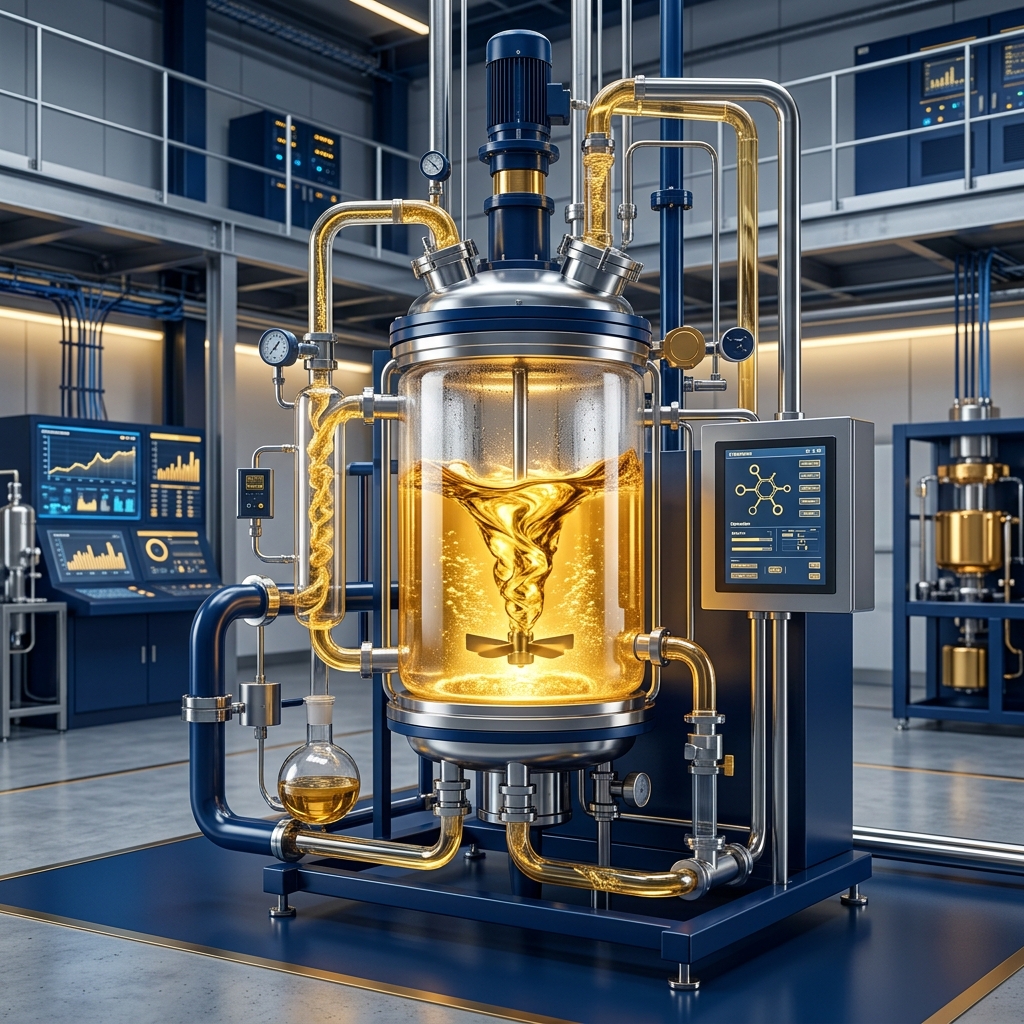
If you are a detergent manufacturer, a small-scale cleaning product maker, or someone just starting out in the liquid soap business in India — this guide is written specifically for you.
Every day, manufacturers across Nagpur, Vidarbha, Maharashtra and Central India ask the same questions:
- How do I use acid slurry (LABSA) to make liquid detergent?
- What is the correct ratio of LABSA to caustic soda?
- Why does my liquid soap turn lumpy or separate?
- How do I get the right pH in my final product?
- What is the difference between using LABSA and SLES?
This blog answers all of it — clearly, practically, and in the Indian context.
What is Acid Slurry (LABSA)?
Acid Slurry is the trade name for Linear Alkyl Benzene Sulphonic Acid — LABSA. It is a brown, viscous liquid with a strong characteristic smell. It is the single most widely used raw material in the Indian detergent industry.
CAS Number: 27176-87-0
LABSA is produced by the sulphonation of Linear Alkyl Benzene (LAB) — a petroleum-derived compound. The sulphonation process uses Sulphur Trioxide (SO₃) or Oleum to produce LABSA.
In India, the most commonly available grades are:
| Grade | Active Matter | Typical Use |
|---|---|---|
| LABSA 90% | 90% AM | Detergent powder, washing bars |
| LABSA 96% | 96% AM | Liquid soap, liquid detergent — most common |
Why is LABSA so important?
LABSA is the backbone of the Indian detergent industry because it is:
- Extremely cost-effective — lowest price per unit of active surfactant
- Available in bulk across India from manufacturers like IOCL, Tamilnadu Petroproducts, and Nirma
- Highly effective at removing grease, oil and organic soil
- Versatile — used in powder, liquid and bar detergents
The Most Important Thing to Understand About LABSA
warning CRITICAL SAFETY NOTE
LABSA is an acid. You CANNOT add it directly to your product without neutralising it first.
This is the single most common mistake made by new manufacturers. Raw LABSA has a pH of approximately 1–2. If you add it directly to your formulation without neutralisation:
- The product will be highly corrosive
- It will damage skin on contact
- It will corrode metal packaging
- The pH will be dangerously low
- Your product will fail any quality test
LABSA must always be neutralised with Caustic Soda (Sodium Hydroxide — NaOH) before use.
The neutralisation reaction converts LABSA (an acid) into LAS — Linear Alkyl Benzene Sulphonate — which is the actual active surfactant in your detergent. This is a permanent chemical change, not just a mixing step.
The Chemistry — Simple Explanation
The neutralisation reaction is:
// Neutralisation Reaction Formula
LABSA (acid) + NaOH (caustic soda) → LAS (sodium salt) + Water
Chemical Equation:
R-C₆H₄-SO₃H + NaOH → R-C₆H₄-SO₃Na + H₂O
What this means in practice:
- LABSA (acidic, pH ~1) reacts with caustic soda (alkaline, pH ~13)
- They neutralise each other
- The product is LAS — a neutral or slightly alkaline surfactant
- The target pH for most liquid detergents is 7 to 9
How Much Caustic Soda Do You Need to Neutralise LABSA?
This is the question every manufacturer asks. Here is the calculation:
| Compound | Molecular Weight | Neutralisation Ratio |
|---|---|---|
| LABSA (as sulphonic acid) | ~322 g/mol | 8.05 parts |
| Caustic Soda (NaOH) | 40 g/mol | 1.00 part |
In practical terms:
For every 8 kg of LABSA 96% — you need approximately 1 kg of caustic soda (100% NaOH).
But since caustic soda in India is commonly available as:
- Flakes (97–99% purity): use 1.03–1.05 kg per 8 kg LABSA
- Liquid lye (32% solution): use approximately 3 kg of liquid lye per 8 kg LABSA
💡 Simplified rule of thumb used by Indian manufacturers:
"For every 100 kg of LABSA 96% — add 12 to 13 kg of caustic soda flakes (97–99% purity)"
Always confirm with pH testing — this ratio gives you a starting point, not a fixed formula.
Step-by-Step Process: How to Neutralise LABSA and Make Liquid Detergent
Equipment You Need
- SS (Stainless Steel) mixing tank — minimum 200 litres for small batch
- Paddle stirrer or mechanical agitator
- pH meter or pH strips (range 0–14)
- Personal Protective Equipment — rubber gloves, safety goggles, apron
- Measuring containers (stainless steel or HDPE)
- HDPE drums or carboys for storage
Do NOT use aluminium or mild steel containers — caustic soda and LABSA both corrode these metals.
Safety Warning — Read Before You Start
LABSA is a Class 8 corrosive material (UN 2584). Caustic soda is also highly corrosive. When neutralising:
- Always wear rubber gloves, safety goggles and a full-length apron.
- Work in a well-ventilated area — neutralisation releases heat and some fumes.
- Never add caustic soda directly to LABSA — always prepare a caustic soda solution in water first.
- Keep running water nearby for emergency washing.
- If either chemical contacts skin — wash immediately with large amounts of water for 15 minutes.
Step 1 — Prepare Your Caustic Soda Solution
Never add dry caustic soda flakes directly to LABSA — this can cause violent splashing and heat generation.
- Take a clean SS or HDPE container.
- Measure the required quantity of soft water or RO water (hard water causes cloudiness).
- Add caustic soda flakes SLOWLY into the water — never water into caustic soda.
- Stir continuously as you add the flakes.
- The solution will heat up significantly — this is normal (exothermic reaction).
- Allow to cool to room temperature before use.
- A typical working solution is 25–30% caustic soda in water.
Step 2 — Add LABSA to Your Mixing Tank
- Add the required quantity of soft water to your mixing tank first.
- Start the agitator/stirrer.
- Add LABSA slowly into the water — never water into LABSA.
- Stir at medium speed.
- The LABSA will disperse and the mixture will become uniform.
- At this stage the mixture is still acidic (pH 2–3).
Step 3 — Neutralise with Caustic Soda Solution
- Begin adding your pre-prepared caustic soda solution slowly and gradually to the LABSA mixture.
- Stir continuously throughout.
- You will notice the mixture foaming — this is normal.
- Add caustic soda in small portions — do NOT add all at once.
- Check pH after each addition using pH strips or pH meter.
- Target pH: 7.0 to 8.5 for most liquid detergents.
- Stop adding caustic soda when you reach your target pH.
- Allow to mix for 5 minutes after reaching target pH.
- Check pH again — if it has risen above 9 add a small amount of citric acid to bring it down.
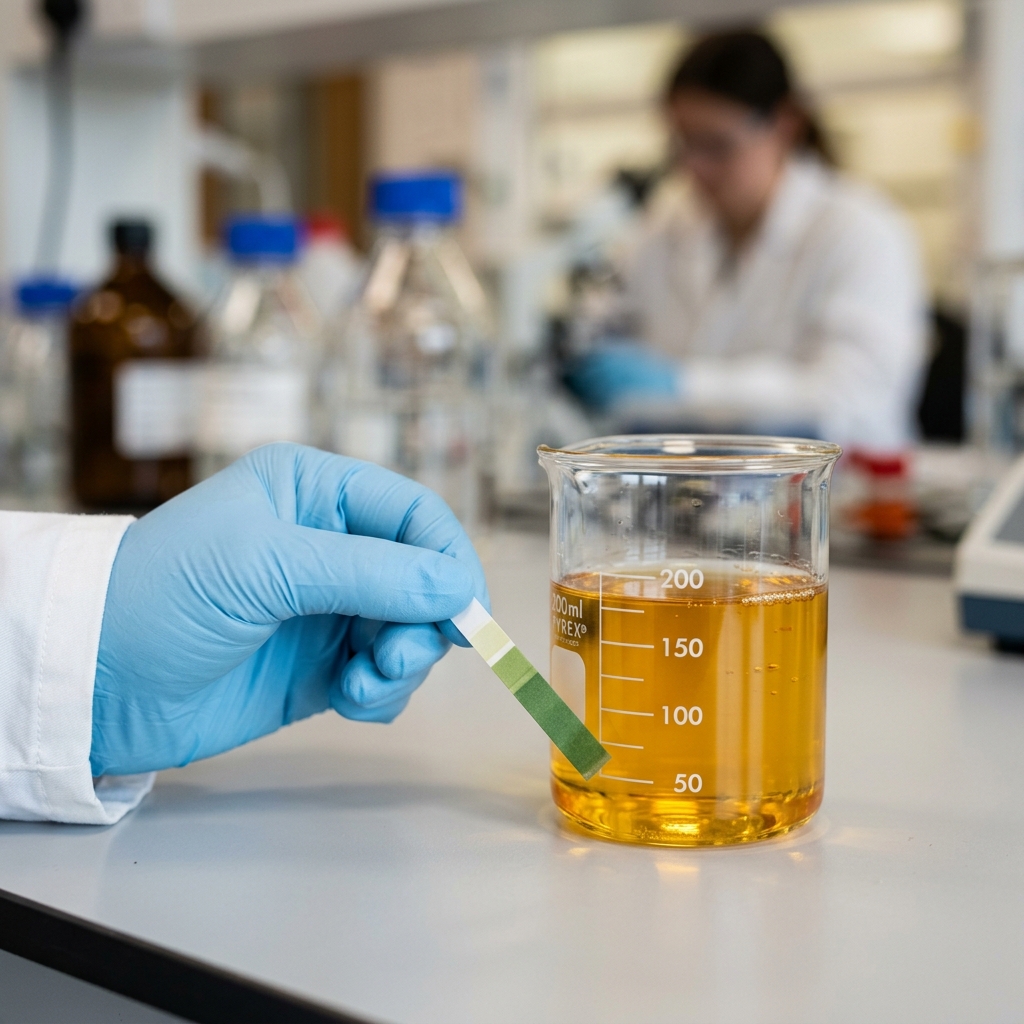
Testing pH using an indicator strip during caustic soda addition to reach the target neutral pH of 7.0–8.5.
Important: The neutralisation reaction generates heat. If your batch heats above 50°C — stop adding caustic soda, let it cool, then continue. Overheating causes product instability.
Step 4 — Add SLES
- Slowly add SLES (28% or 70% grade) to the mixture.
- SLES does NOT need neutralisation — it is already a neutral salt.
- Add while stirring continuously.
- If using SLES 70% paste — warm it slightly for easier handling.
- Typical addition: 10–20% of total batch weight depending on formulation.
The combination of LABSA (now neutralised to LAS) and SLES gives your liquid detergent its characteristic foam and cleaning power:
- LAS (from LABSA) — deep cleaning, grease cutting.
- SLES — fine foam, mildness, better skin feel.
Step 5 — Add Remaining Ingredients
In this order:
- CDEA (Coconut Diethanolamide) [2–5%] — Foam booster and thickener
- Salt (NaCl — common salt) [1–3%] — Viscosity thickener
- Glycerin [0.5–2%] — Moisturising agent for skin feel
- EDTA (Tetrasodium) [0.1–0.3%] — Chelating agent for hard water
- Preservative [0.05–0.1%] — Prevents microbial growth
- Fragrance [0.3–1%] — Scent (add after temperature drops below 40°C)
- Colour / Dye [0.01–0.05%] — Appearance
Step 6 — Final pH Check and Packaging
- Allow mixture to cool completely to room temperature.
- Check final pH — target 7.0 to 8.5.
- Check viscosity — should be uniform, no lumps, no separation.
- If too thin — add 1% salt solution slowly until desired thickness.
- If too thick — add small amount of water with stirring.
- Fill into HDPE bottles or carboys.
A Basic Liquid Detergent Formula for 100 kg Batch
This is a standard formulation widely used by small and medium manufacturers in India:
| Ingredient | Quantity (kg) | Percentage (%) |
|---|---|---|
| Water (soft / RO) | 58 kg | 58% |
| LABSA 96% | 14 kg | 14% |
| Caustic Soda (flakes 98%) | 1.8 kg | 1.8% |
| SLES 28% | 15 kg | 15% |
| CDEA | 3 kg | 3% |
| Salt (NaCl) | 2 kg | 2% |
| Glycerin | 1 kg | 1% |
| EDTA / Preservative / Fragrance / Colour | 1.85 kg | 1.85% |
| Total Batch | 100 kg | 100% |
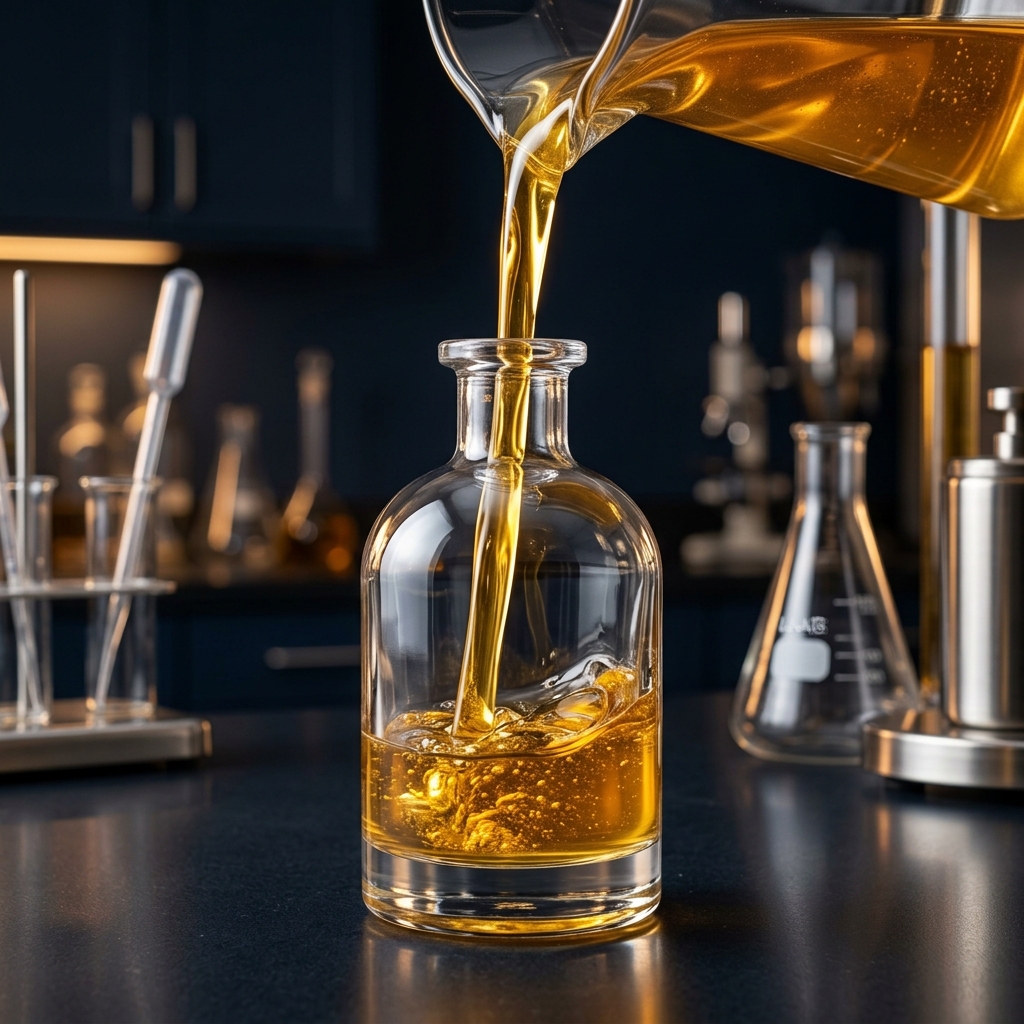
A premium, high-viscosity liquid soap formulated with balanced LABSA and SLES active surfactants.
Common Problems and How to Fix Them
-
1. Product Turns Lumpy or Gels:
Cause: LABSA added too fast, or water is too hard. Fix: Use soft/RO water, add LABSA slowly with continuous stirring. -
2. Product Separates Into Two Layers:
Cause: Incomplete neutralisation, or added SLES before full neutralisation of LABSA. Fix: Always complete LABSA neutralisation and check pH (7.0 - 8.5) before adding SLES. -
3. pH Too High (Above 9):
Cause: Excess caustic soda solution added. Fix: Add 10% citric acid solution slowly until pH falls to 7.5 - 8.5. -
4. Viscosity Too Thin (No Body):
Cause: Low CDEA or insufficient salt. Fix: Add 10% NaCl salt solution slowly (1% at a time), do not exceed 3% total salt.
LABSA vs SLES — When to Use Which?
A question every manufacturer asks:
| Property | LABSA (as LAS) | SLES |
|---|---|---|
| Cleaning Power | Very high — excellent grease cutting | Moderate — better for skin-safe formulas |
| Foam Quality | Dense, heavy foam | Fine, long-lasting, creamy foam |
| Skin Mildness | Harsher — not ideal for body use | Much milder — preferred for handwash/shampoo |
| Neutralisation | Yes — mandatory | No — ready to use |
For most Indian small manufacturers: Use both together — LABSA provides cleaning power and cost efficiency, SLES provides foam quality and mildness.
How to Check Quality of Your LABSA Before Use
- Appearance: Clear brown to dark brown viscous liquid with no solid sediments.
- Smell: Characteristic acid smell, no rancid or burnt odours.
- pH test: Dilute 1 ml in 100 ml water — pH should be 1.5 to 2.5.
- Active Matter: Ask for COA from supplier — should be 90% or 96% minimum.
GST and Transport — Practical Notes for Buyers in Nagpur and Central India
LABSA attracts 18% GST in India. Sourcing locally from Nagpur-based distributors saves significant freight cost vs sourcing from Mumbai or Gujarat.
For buyers in Nagpur, Vidarbha, MP and Chhattisgarh — freight from Mumbai to Nagpur typically adds ₹2–4 per kg for drum quantities, whereas local pickup from Butibori MIDC has ₹0 freight cost.
Where to Buy LABSA and SLES in Nagpur and Central India
FragVansh Aromatic Elements supplies LABSA 96%, SLES 28%, SLES 70%, and all other detergent raw materials from our warehouse at Butibori MIDC, Nagpur. We deliver pan-India with COA and MSDS provided for every batch.
You can request a quote or contact our sales team directly at the Contact Page.
Frequently Asked Questions
What is acid slurry and what is it used for?
Acid slurry is the common trade name for LABSA — Linear Alkyl Benzene Sulphonic Acid (CAS 27176-87-0). It is a brown viscous liquid used as the primary raw material in manufacturing liquid detergent, detergent powder, washing bars, floor cleaner, dishwash liquid and industrial cleaning products across India.
How much caustic soda do I need to neutralise LABSA?
For every 100 kg of LABSA 96% you need approximately 12 to 13 kg of caustic soda flakes (97–99% purity). For LABSA 90% use 11 to 12 kg per 100 kg. Always verify with a pH meter — the correct final pH for liquid detergent is 7.0 to 8.5. Do not rely on ratios alone.
Can I add LABSA directly into my liquid soap without neutralising it?
No — never add LABSA directly without neutralisation. Raw LABSA is a strong acid with pH 1 to 2. Adding it without neutralisation will make your product corrosive, dangerous to skin and completely unsuitable for use. LABSA must always be neutralised with caustic soda (NaOH) before being used in any formulation.
What is the correct order of mixing LABSA, caustic soda and SLES?
The correct order is: first add water to the mixing tank, then add LABSA into the water while stirring, then add the pre-prepared caustic soda solution slowly until pH reaches 7 to 8.5, then add SLES, then add CDEA, salt, glycerin and other ingredients, and finally add fragrance last when temperature is below 40°C.
What pH should liquid detergent made from LABSA have?
Liquid detergent and floor cleaner should have a pH of 7.0 to 8.5. Dishwash liquid should have a pH of 6.5 to 7.5. Handwash and body wash should be pH 5.5 to 7.0. Always test pH with a calibrated pH meter before packaging — never rely on visual appearance alone.
Why is my liquid detergent turning lumpy or gelling?
Lumping or gelling is caused by one of three things — adding water to LABSA instead of LABSA to water, using hard water (high TDS) instead of soft or RO water, or working at temperatures below 15°C. Always add LABSA into water, always use soft water with TDS below 150 ppm, and work at room temperature between 25 and 35°C.
Why is my liquid soap separating into two layers?
Separation happens when LABSA is not fully neutralised before SLES is added, or when the formula has insufficient thickener, or when temperature drops suddenly after production. Always neutralise LABSA completely and confirm pH 7 to 8.5 before adding any other ingredient. Re-homogenise separated batches by gentle stirring.
What is the difference between LABSA and SLES in detergent making?
LABSA is an acid that must be neutralised first and provides strong grease-cutting and deep cleaning performance. SLES is a ready-to-use neutral surfactant that provides mild, fine foam and is gentler on skin. LABSA is cheaper per kg of active matter. Most Indian manufacturers use both together — LABSA for cleaning power and SLES for foam quality and mildness.
How do I make liquid soap thicker without adding too much salt?
Use CDEA (Coconut Diethanolamide) at 3 to 5% of the batch — it thickens the product without causing cloudiness and also boosts foam. Salt (NaCl) is a cheaper thickener but excess salt above 3% can cause the product to turn hazy, gel or separate. For premium clear liquid soap use CDEA as the primary thickener and salt only as a fine adjustment.
What is the shelf life of liquid detergent made with LABSA?
Liquid detergent made from LABSA has a shelf life of 12 to 18 months when stored in sealed HDPE containers away from direct sunlight and heat. Adding a preservative at 0.05 to 0.1% significantly extends shelf life and prevents microbial contamination. Always label with batch number and manufacture date.
My LABSA has turned solid or very thick in winter — what do I do?
LABSA becomes very thick or semi-solid at temperatures below 15°C which is common in Nagpur and Central India during December to February. To handle frozen or semi-solid LABSA — place the drum in a warm water bath (not direct flame or boiling water) and allow it to warm slowly to 25 to 30°C. Never heat LABSA above 50°C and never use open flame or microwave.
Can I make dishwash liquid using the same LABSA and SLES formula?
Yes — dishwash liquid uses the same base formula as liquid detergent. For dishwash reduce LABSA slightly and increase SLES proportion to improve skin mildness since dishwash contacts hands frequently. Add CDEA at 3 to 5% for foam. Target pH for dishwash is 6.5 to 7.5 compared to 7.5 to 8.5 for floor cleaner.
How do I know if my LABSA is good quality before buying?
Good quality LABSA 96% should have: active matter minimum 96%, colour (Klett) maximum 90, free sulphuric acid maximum 1.2%, water content maximum 1.0%, and an appearance of clear brown to dark brown viscous liquid with no solid particles. Always ask your LABSA supplier for a COA (Certificate of Analysis) for every batch before accepting delivery.
Where can I buy LABSA in Nagpur, Maharashtra?
FragVansh Aromatic Elements supplies LABSA 96% in Nagpur from Butibori MIDC — Asia's largest industrial zone. We deliver pan-India including Maharashtra, Madhya Pradesh, Chhattisgarh and Telangana. COA and MSDS provided with every order. Call or WhatsApp 7447717744 or visit fragvansh.com for pricing and availability.
What is the minimum order quantity for LABSA from FragVansh?
FragVansh supplies LABSA in flexible quantities from a single 250 kg drum to multiple metric tons per order — suitable for both small manufacturers and large industrial buyers. Contact us on 7447717744 for current pricing based on your required quantity.
Is LABSA safe to handle at home or small unit level?
LABSA is classified as a Class 8 corrosive material (UN 2584). It can cause severe burns on skin and eye contact. It is safe to handle with proper precautions — always wear rubber gloves, safety goggles and a full-length apron. Work in a well-ventilated area. Keep running water nearby. If contact occurs wash immediately with large amounts of water for 15 minutes and seek medical attention.
What is the GST rate on LABSA in India?
LABSA attracts 18% GST in India (HSN code 3402). For registered manufacturers purchasing LABSA for use in production — the 18% input GST is fully recoverable as Input Tax Credit (ITC) when you file your GST returns. Your effective cost is therefore the pre-GST price when ITC is claimed.
Can I use LABSA 90% instead of LABSA 96% for liquid soap?
Yes — but you will need to use more LABSA 90% to achieve the same active matter level. LABSA 96% is preferred for liquid soap as it gives a cleaner and clearer product with less odour. LABSA 90% is better suited for detergent powder and washing bars where clarity is not critical.
How do I dispose of failed or off-spec liquid detergent batches?
Never pour large quantities of liquid detergent or raw LABSA/caustic soda directly into drains. For small quantities — dilute heavily with water at a minimum ratio of 1:100 before drain disposal. For large batches of failed product — contact your local MPCB (Maharashtra Pollution Control Board) or state pollution board for guidance on approved chemical waste disposal in your area.
Summary — Key Points to Remember
- LABSA must always be neutralised with caustic soda before use.
- Add LABSA to water, never water to LABSA.
- Prepare caustic soda solution separately and let it cool before adding.
- Target pH for liquid detergent/floor cleaner: 7.0 to 8.5.
- Use soft/RO water to avoid cloudiness.
- Add SLES after LABSA is fully neutralised.
- Add fragrance below 40°C.
- Always verify with a pH meter.
About FragVansh Aromatic Elements
FragVansh Aromatic Elements is a Nagpur-based B2B specialty chemicals and aroma chemicals trading company operating from Butibori MIDC — Asia's largest industrial zone. We supply LABSA, SLES, Pine Oil, DEP, Terpineol, DHM, Glycerin, TRO, LLP, Benzyl Alcohol and 26+ specialty chemicals pan-India.
Visit Website →Disclaimer: The formulations and ratios provided in this blog are for general guidance only. Always conduct small-scale trials before full production. Consult a qualified chemical engineer for commercial-scale manufacturing. FragVansh Aromatic Elements is not liable for any outcomes resulting from the use of information in this article.